May 2026:
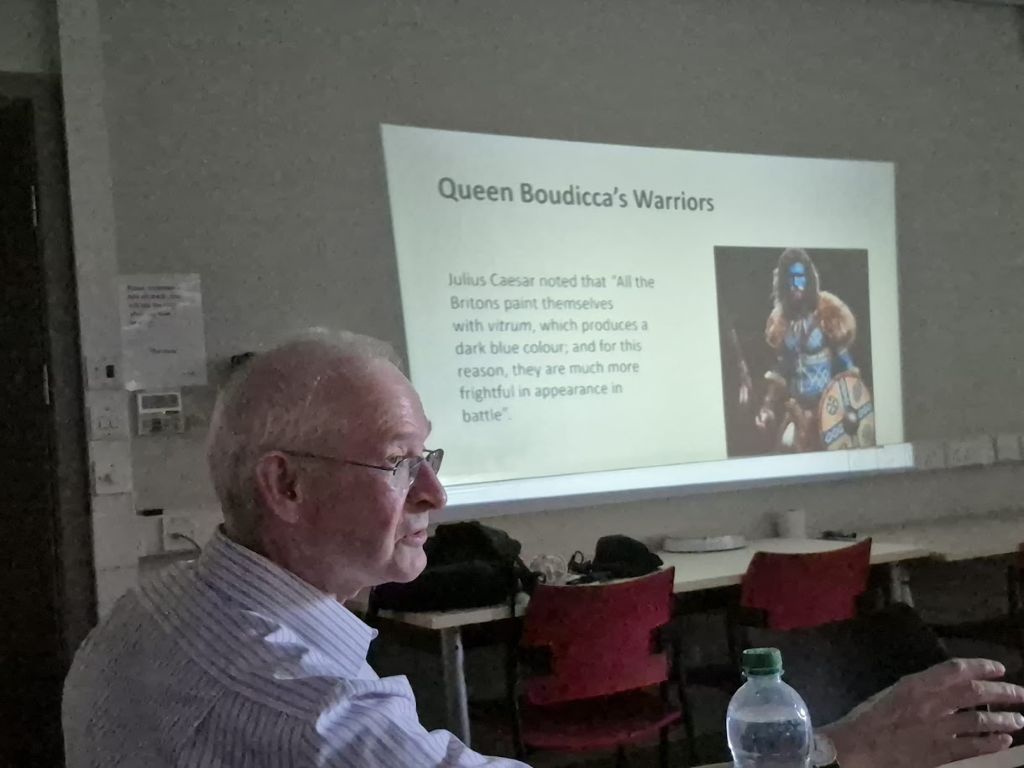
Our May meeting was well attended to watch David Johnson’s presentation “Woad to Warfarin”, which discussed the role of textile dyes in the birth of modern medicines for relieving pain and curing diseases.
Early dyes such as woad were known to have antiseptic properties, which might explain why the ancient Britons smeared their bodies before battles with the Roman army. When new chemicals were found in coal tar in the 19th century, chemists made new colours from them and also new drugs, which were more reliable than herbal medicines.
The money generated by dyes advanced our knowledge of the bacteria that was responsible for many common diseases such as tuberculosis and cholera and led to the discovery of new treatments. New medicinal practices were adopted, which are still in use today. These include dyes for highlighting the position and size of cancer tumours for subsequent removal or focussed destruction using lasers.