August 2026:
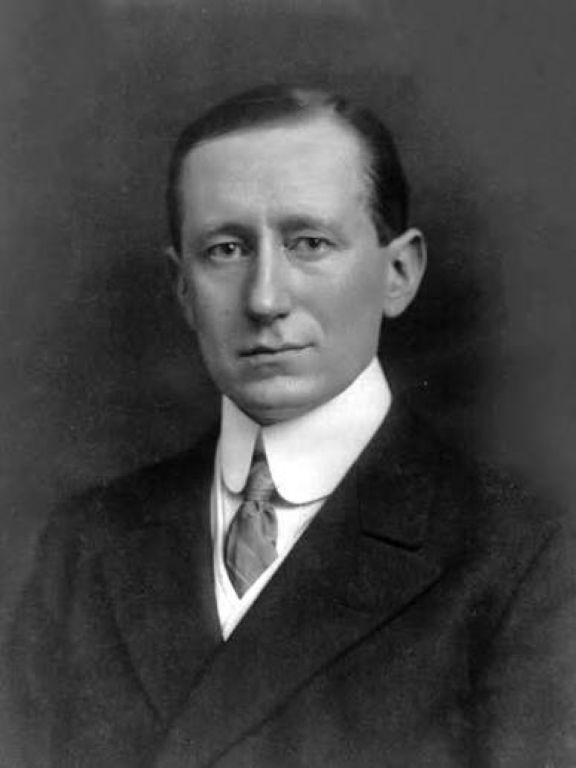
Michael Carver presented the achievements of Marconi, which include the transistor radio, television and telephone (which would lead to the everyday mobile phone).
Guglielmo Giovanni Maria Marconi was an Italian electrical engineer and inventor known for his creation of a practical radio wave-based wireless telegraph system.
This led to his being largely credited as the inventor of radio and sharing the 1909 Nobel Prize in Physics with Ferdinand Braun "in recognition of their contributions to the development of wireless telegraphy." Marconi did not receive any formal education during his youth. Instead, he learned chemistry, mathematics, and physics at home from a series of private tutors hired by his parents.
He was interested in science and electricity and began working on the idea of "wireless telegraphy", i.e., the transmission of telegraph messages without connecting wires as used by the electric telegraph. This was not a new idea; numerous investigators and inventors had been exploring wireless telegraph technologies for over 50 years, but none had proven technically and commercially successful.
Marconi successfully developed a method to transmit Morse code without wires, significantly enhancing communication capabilities at sea and in remote areas.
After receiving his first patent in Italy in 1896, he improved the device's transmission distance from one mile to over two thousand miles, successfully achieving the first transatlantic radio transmission in 1901.
This breakthrough challenged existing theories about radio wave propagation and opened new avenues for long-distance communication.
David Johnson