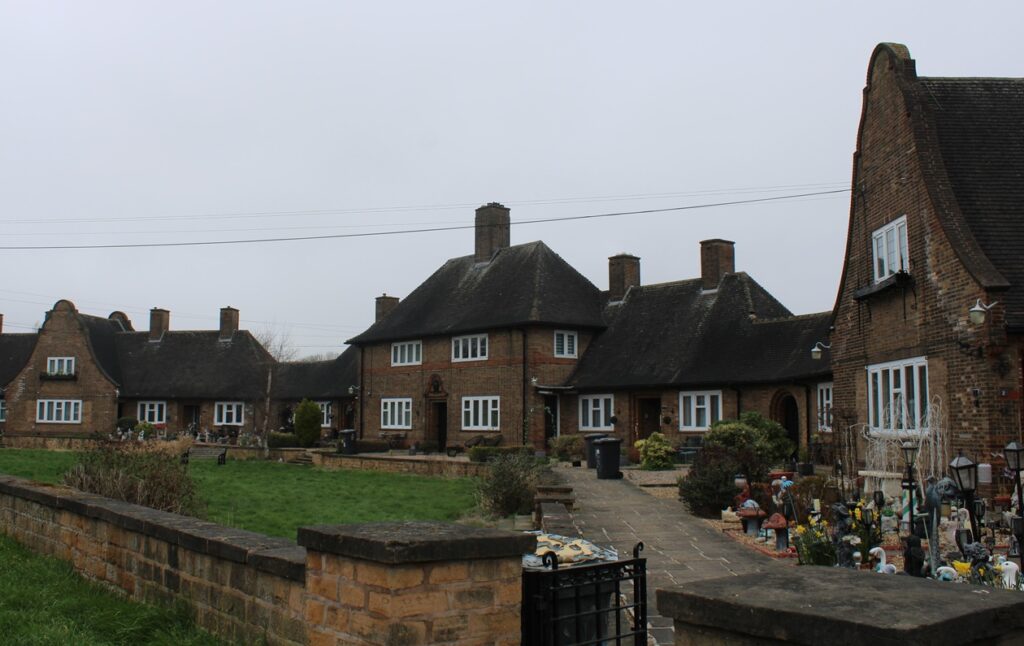
March 2026
At our March meeting, Robert Mee gave us an interesting talk on Almshouses. He started with the history of almshouses as a form of social housing dating from Roman times. Many were attached to monastic sites and were called hospitals – not for the sick but for the poor and homeless as well as pilgrims and travellers. With the spread of leprosy during the Crusades, a form of home called a Lazar (after St Lazarus) developed. In addition there were Bede Houses, usually endowed by wealthy patrons and including a priest to pray for the benefactors.
With the development of Poor Laws, almshouses provided a very basic home for poor people who lived under license (with no rights of tenancy). The endowment was often supported by land or other investments to provide a charitable income. The charity would specify the type of tenant who would be eligible for housing – by sex, age or occupation.
Robert continued by telling us about many local almshouses with illustrations. In Gedling we have the Mary Hardstaff homes, named after a member of the family part owning Digby Collieries. Still in use, they are for those from coal mining. In Wilford are the Dorothy Boot homes for veterans of the Crimea and Indian Mutiny. Others, such as the Collins Almshouses, have been demolished or repurposed. Income from the sale is then reinvested in building more modern properties bungalows and flats which are often indistinguishable from other social housing.