October 2026:
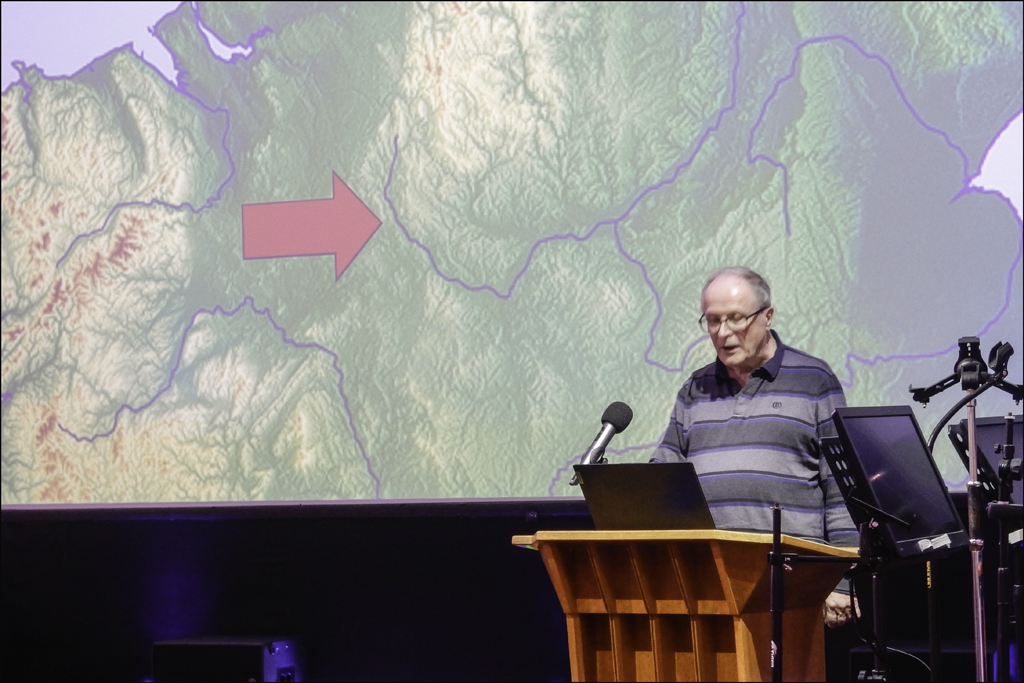
As a former journalist and teacher Mike Burton kept us spellbound with a fast flowing journey down the Trent, winding its way from Staffordshire moorlands to the Humber in the East. Conveniently the river provided a North South boundary, interweaving a wealth of historic and religious stand offs from the Romans and Brigantes to movements like the Chartists, Jacobites, Roundheads and Royalists.
The Romans on their first attempt failed to get much further than the Trent, whilst Bonnie Prince Charlie upon reaching Swarkstone bridge (the longest stone bridge in Britain at nearly a mile long) is said to have lost hope and turned back.
The Potteries needed a better transport system than packhorses so despite the challenges of lock building and barges being pulled through the darkness of a two mile tunnel, Brindley built the Trent and Mersey Canal and joined it to the river, allowing bone china, such as Wedgewood, production to flourish.
After this industrialised area the character of the river changed, flowing peacefully into the Peak District where the River Dove joined the Trent cleansing and nearly doubling its size. Contenders for Queen of the Trent ranged from Nottingham, Tricentona, the river goddess (marking the meeting of three rivers) near Alrewas, to Warrior Queens such as Boudica and Aethelred (daughter of Alfred the Great). Writers, politicians and religious leaders including Dr Samuel Johnson, Robert Peel and William Booth knew the river, whilst Wesley’s' home lay in Epworth towards the end of the journey.
The Trent Aegir enacts its final drama disrupting barges and moorings as the spring tide surges up against the flow of the river. Meanwhile we continued downstream to where the Trent emptied out into the Humber and on into the sea.
It was an enlivening talk which gave us the opportunity to feel more connected to the part our river played in linking and shaping Britain's history.
Helen Davies