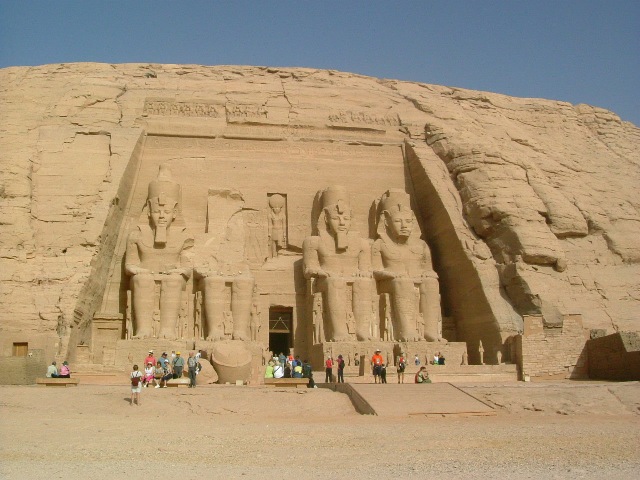
Our September meeting took us around Europe visiting UNESCO World Heritage sites.
To set the scene, we had a presentation on the origins of the scheme. The first site that UNESCO was involved with was the rescue of Abu Simbel Temple in 1960. This was followed by several Conventions covering both cultural and natural criteria for listing sites throughout the world. In Britain alone there are about 20 sites.
We then heard about the Antonine Wall built by the Romans between the Rivers Clyde and Forth in Scotland. Built of turf on a stone base with a ditch on the north side, it was only in use for a few years before the Romans withdrew south. Later they built the better known Hadrian’s Wall.
Remaining with the Romans, we learned about the cities of Pompeii and Herculaneum. Destroyed by the eruption of Vesuvius, much of the ruins have been uncovered and give an insight into Roman life.
Next to Durham where the cathedral was founded by the monks of Lindisfarne, the current building was constructed shortly after the Norman invasion and is an excellent example of Norman architecture. The Normans strategically appointed the Bishop of Durham as Prince Bishop and so the castle was built soon after.
In France, the Chateau Chambord is a huge building with many towers of varying designs. Apparently it could accommodate 2000 guests.
We finished in Cyprus where the Paphos region was initially the birthplace of Aphrodite leading to a temple being built. The Romans built a new town of Paphos with several high status villas which have been excavated over the last 150 years. Nearby is an ancient necropolis called the Tombs of the Kings – actually the tombs of high status residents rather than Kings.
Andy Dixon